It’s only an hour-long, adrenaline-pumping drive from Peshawar to Darra but in a sense it’s a journey to the distant past. The village, a mile-long muddy street lined with crude shops, sits at the foot of a mountain range about 60 kilometers from the mouth of the Khyber Pass, at the heart of what the Pakistani government calls the Tribal Zone. Pakistani law applies only on the main highway. Tribal law, whatever that might be, decides the fate of travelers who wander off the road.
Nature is not kind to Darra. In winter, biting cold winds sweep south out of Afghanistan and mix snow with the dust of the parched and rocky landscape. In summer, it bakes under a dry withering heat that regularly tops 50 degrees Celsius.
Despite this unpleasantness, Darra manages to bustle with a steady stream of visitors. Indeed, its shops are always crowded with eager bargain hunters and deal-makers. For over a century the village has been famous for two commodities: guns and drugs. Walk down the street on a typical day and you brush past a cast of characters from the darker side of human endeavor.
There are Taliban fighters with bandoleers and folding stock machine guns tucked under their arms hitching rides with Pakistani smugglers moving Japanese TVs from Kabul to Karachi. Sikh separatists used to shop here, back in the day, to settle their scores in the Indian Punjab. Agents of the CIA, the ISI and the Afghan secret service blend in perfectly with the two-bit arms and drug dealers that are drawn here from all over the Middle East and Asia with rupees and dollars to spend.
In tiny tea shops under posters of the late Gen. Zia ul Haq, pathetic addicts, fugitives from the laws of almost everywhere, peasants, beggars and warlords mix and mingle over sips of sweet green chai. There is not a single woman in sight. No one in Darra has ever seen a policeman. Everyone is armed to the teeth.
With the exception of the tea stalls, two filthy restaurants and a watermelon stand, almost every other shop spills into the street displaying an inventory of fire arms that makes Darra a one-stop gun shopping heaven.
First there’s the novelty items like pistols hidden in walking sticks and ball-point pens that fire a single .22 round when you depress the pocket clip. For more serious business choose from pistols that splatter a 12-guage shotgun shell. Rifles of every description and all periods of history hang row after row, and there are even a few long muzzle-loading rifles left over from the Crimean War.
Moving upscale, there are stubby little Tommie guns with round magazines like a prop from an Al Capone movie, racked with M-16s, automatic pistols, Uzis and every model of Kalashnikov ever made.
For customers who think big, there is also a huge selection of specialized military hardware; the kinds of things you'd need a pickup truck to carry away; mortars, grenade launchers, rockets, cannons and box after box of bullets and shells to fit each one.
In addition, almost every house is a primitive gun factory that can fabricate an astonishingly accurate copy of any weapon, using only the crudest tools, in virtually no time at all. Here and there are metal lathes, grinding wheels and electric drills running on noisy generators, but most of the work is done squatting on the ground in front of a blacksmith’s vice surrounded by a collection of files and rasps.
Of course, whatever you're planning to buy you’ve got to test. Customers regularly pop their heads out of doors and blast a few rounds off into the sky. The heavier stuff they haul around the back. There, as long as you pay for the ammunition, you can pepper the side of the mountain with ordinance for as long as you want.
The drug trade is somewhat less flamboyant but no less obvious. Furtive men puff opium in shops stacked to the ceiling with tons of pungent marijuana. Other men squat for hours in dark hovels, rolling out perfectly uniform kilogram bars of dark brown, buttery hashish; each stamped with a number and a logo. Still others sweat in the hammer-hard sun, carefully slicing the pods of poppy flowers so the sap will ooze out and dry. It is gathered into sticky bundles of opium wrapped in leaves and then in plastic for shipping. A ten thousand dollar investment at this end, it is said, to finesse the connivance, bribery and bravado required of the smuggling operation, will suck $5 million or so off the streets of New York or Amsterdam, London or Madrid.
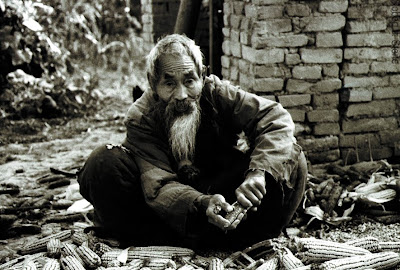
When the sun reaches its highest point, most of the men turn in their tiny shops, as they do five times a day, and quietly facing Mecca, they renew their submission to Allah. Islam has endured this harsh environment for a thousand years. The most respected are the old, white-bearded hajis; those who've been to Mecca.
A woman here seems to have a little more esteem in the community than a good camel, but not much more. In public she peers at the world through the eye-hole of her burka, like a sleeping bag pulled over her head. Her private life is an unbroken cycle of fetching water, drying cow dung patties for fuel, cooking, and caring for children.
While the technology of their livelihood has kept pace with the changes from muzzle-loader to full automatic into the twenty-first century, the folks in Darra seem socially pretty well adjusted to life in the twelfth.